
Overview

Track your fitness progress and set health goals with our body fat calculator app. Easily calculate your body fat percentage using weight, height, and age.

Body fat percentage tells you how much of your weight is fat versus lean tissue, which a scale or BMI alone cannot show. People use it to track whether a training plan is building muscle or losing fat, to compare against fitness ranges, or to feed a more accurate number into calorie formulas like Katch-McArdle. You can choose the U.S. Navy tape-measure method, which uses neck, waist and (for women) hip circumferences, or a quicker BMI-based estimate that needs only age, weight and height. The result shows your percentage, its American Council on Exercise category, and how many kilograms of your weight are fat and lean mass, so you can re-measure every few weeks and see the trend.
Formula and example

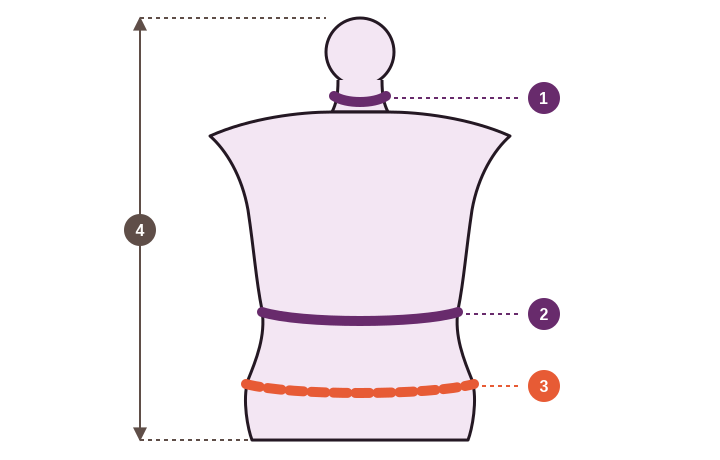
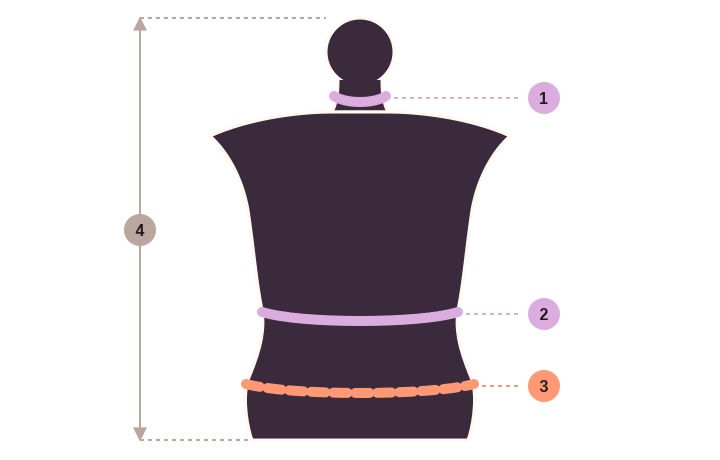
Schematic figure from head to upper thigh with three measuring bands at the neck, the waist and the hips, and a height line on the left.

Where the U.S. Navy method is measured. Men need neck and waist; women also need hips. Keep the tape level and snug without compressing the skin.

  1. Neck: just below the larynx, tape sloping slightly down at the front
  2. Waist: at the navel for men, at the narrowest point for women
  3. Hips: around the widest point, used only in the women’s formula
  4. Height: measured without shoes
Densitymen=1.0324−0.19077log⁡10(Waist−Neck)+0.15456log⁡10(Height)\displaystyle \text{Density}_{\text{men}} = 1.0324 - 0.19077 \log_{10}(\text{Waist} - \text{Neck}) + 0.15456 \log_{10}(\text{Height})
Densitywomen=1.29579−0.35004log⁡10(Waist+Hip−Neck)+0.221log⁡10(Height)\displaystyle \text{Density}_{\text{women}} = 1.29579 - 0.35004 \log_{10}(\text{Waist} + \text{Hip} - \text{Neck}) + 0.221 \log_{10}(\text{Height})
Body fatNavy=495Density−450\displaystyle \text{Body fat}_{\text{Navy}} = \frac{495}{\text{Density}} - 450
BMI=Weight(Height÷100)2\displaystyle \text{BMI} = \frac{\text{Weight}}{(\text{Height} \div 100)^{2}}
Body fatBMI=1.2×BMI+0.23×Age−{10.8men0women−5.4\displaystyle \text{Body fat}_{\text{BMI}} = 1.2 \times \text{BMI} + 0.23 \times \text{Age} - \begin{cases} 10.8 & \text{men} \\ 0 & \text{women} \end{cases} - 5.4
Fat mass=Weight×Body fat100,Lean mass=Weight−Fat mass\displaystyle \text{Fat mass} = \text{Weight} \times \frac{\text{Body fat}}{100},\quad \text{Lean mass} = \text{Weight} - \text{Fat mass}

Where:

Density
— Estimated body density from the U.S. Navy formula, using the men's or women's coefficients.
Body fat
— Estimated body fat percentage, shown with one decimal place and never below 0.
Waist
— Waist circumference in centimeters.
Neck
— Neck circumference in centimeters.
Hip
— Hip circumference in centimeters, used only in the women's Navy formula.
Height
— Height in centimeters, converted from inches at 2.54 cm per inch if needed.
Weight
— Body weight in kilograms, converted from pounds if needed; used by the BMI method and, for both methods, to split your weight into fat and lean mass.
BMI
— Body mass index, weight in kilograms divided by height in meters squared.
Age
— Your age in years, used only by the BMI method.
Fat mass
— The kilograms of your body weight estimated to be fat.
Lean mass
— Everything else: muscle, bone, water and organs, in kilograms.

Worked example

A man who is 170 cm tall with a 40 cm neck and an 80 cm waist, using the U.S. Navy method (the calculator's default inputs).

  1. Waist minus neck

    80−40=40 cm\displaystyle 80 - 40 = 40\ \text{cm}
  2. Density

    1.0324−0.19077log⁡10(40)+0.15456log⁡10(170)≈1.0324−0.30562+0.34474=1.07152\displaystyle 1.0324 - 0.19077 \log_{10}(40) + 0.15456 \log_{10}(170) \approx 1.0324 - 0.30562 + 0.34474 = 1.07152
  3. Body fat

    4951.07152−450≈461.96−450=11.96≈12.0%\displaystyle \frac{495}{1.07152} - 450 \approx 461.96 - 450 = 11.96 \approx 12.0\%

Result

The estimated body fat is 12.0%.

FAQs

What is a healthy body fat percentage?

Ranges differ by source, but a widely cited chart from the American Council on Exercise lists about 14 to 17% (men) and 21 to 24% (women) as fitness level, and 18 to 24% (men) and 25 to 31% (women) as average. Essential fat is roughly 2 to 5% for men and 10 to 13% for women. Athletes often sit below the fitness range.

How do you measure body fat with a tape measure?

The U.S. Navy method uses height plus neck and waist circumference for men, and adds hip circumference for women. For example, a man who is 178 cm tall with a 38 cm neck and 86 cm waist comes out at about 17.2% body fat. Measure in the morning before eating and take each measurement twice for consistency.

What is the BMI method for estimating body fat?

It uses the Deurenberg equation: 1.2 × BMI + 0.23 × age − 10.8 (for men only) − 5.4. A 30-year-old man who weighs 70 kg and is 170 cm tall has a BMI of 24.2 and an estimated body fat of about 19.8%. It is quick but less precise than tape measurements because it cannot tell muscle from fat.

How accurate are online body fat calculators?

Tape-measure methods like the U.S. Navy formula are typically within a few percentage points of lab methods for many people, but error grows for very lean, very muscular or higher-body-fat individuals. DEXA scans and hydrostatic weighing are more precise. Using the same method and conditions each time makes changes over time meaningful.

Is body fat percentage better than BMI?

Body fat percentage separates fat from lean mass, so it can show that a muscular person with a BMI of 27 is not carrying excess fat. BMI is easier to measure and is what most health guidelines use for screening. Many people find it useful to track both.

Why does the calculator ask for hip measurement only for women?

The U.S. Navy formula for women was developed with waist, hip and neck measurements, because women tend to store more fat around the hips. The male formula uses only waist and neck, so the hip field is hidden when Male is selected.

How to use

Pick a calculation method, enter your details and measurements, and read your estimated body fat percentage.

  1. Choose a calculation methodSelect U.S. Navy Method if you have a tape measure, or BMI Method for a quick estimate from age, weight and height only.
  2. Enter gender, weight, height and ageSelect Male or Female and enter weight in kg or lbs and height in cm or in, for example 70 kg and 170 cm. The age field appears only for the BMI method, because the Navy formula does not use age.
  3. Enter neck, waist and hip circumference (Navy method)Measure the neck just below the larynx and the waist at the navel for men, or at the narrowest point for women. Women also enter hip circumference at the widest part of the buttocks. Keep the tape level and snug, for example neck 38 cm and waist 86 cm.
  4. Read your resultsYou see your estimated body fat percentage, its ACE category (essential fat, athletes, fitness, average or obese), your fat mass and lean mass in kilograms, and the method used. The obese category and values below essential fat are highlighted. The trend over several measurements is more useful than any single reading.

Assumptions

  • Both methods are statistical estimates and do not measure body fat directly.
  • The Navy method assumes circumferences are taken at the standard sites with the tape level and snug, and it needs a waist larger than the neck (for women, waist plus hip larger than the neck); otherwise no result is shown.
  • The BMI method assumes average muscle mass for your age and sex, so it can overestimate body fat in muscular people.
  • The category uses the American Council on Exercise ranges: for men essential 2–5%, athletes 6–13%, fitness 14–17%, average 18–24%, obese 25% and above; for women essential 10–13%, athletes 14–20%, fitness 21–24%, average 25–31%, obese 32% and above.

Explore more